Asian production culture
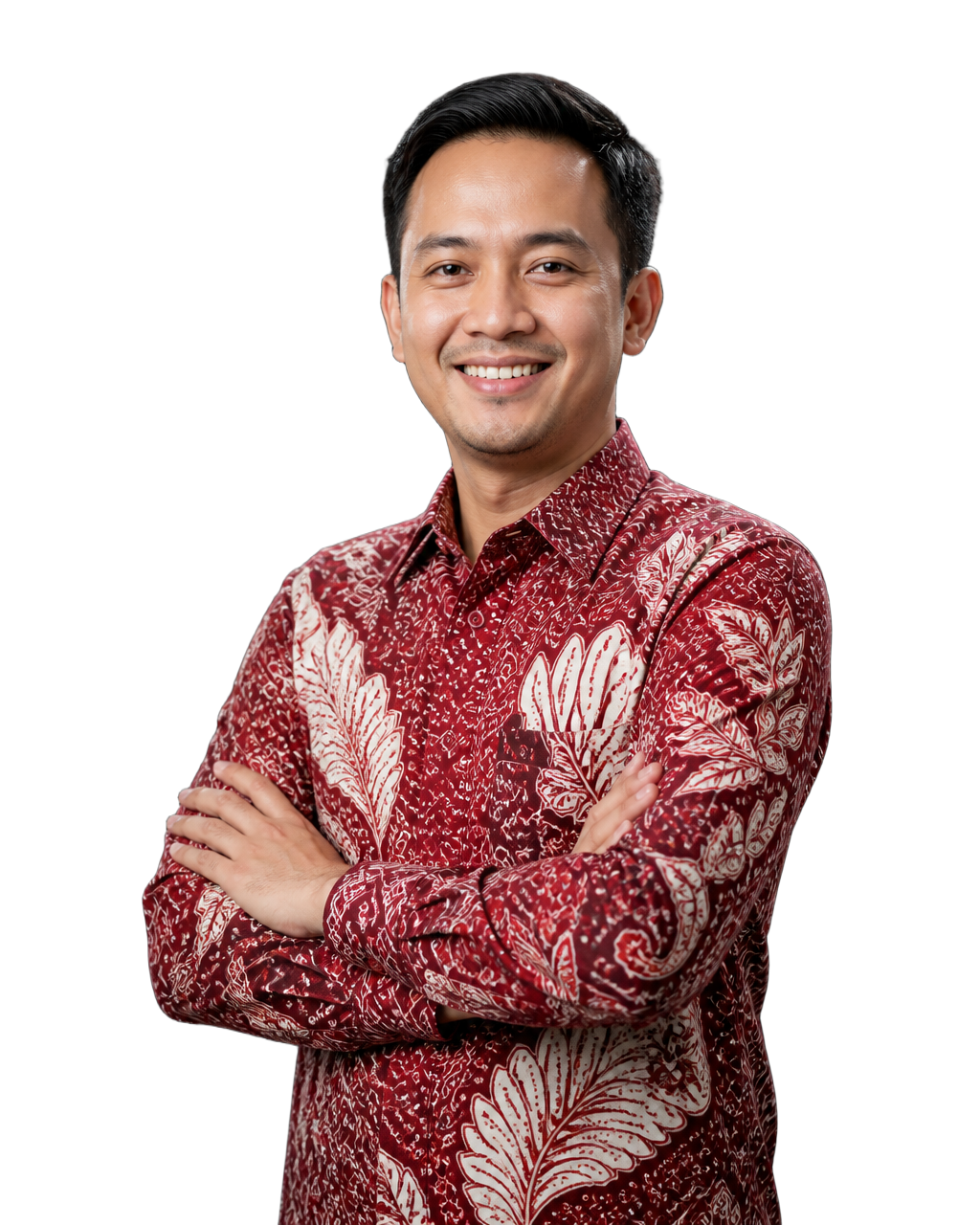
Candidates raised on Japanese and Korean factory standards: shift work, 5S, quality control and safety procedures come naturally.

 Recruitment from Indonesia
Production workers, welders, food-processing and warehouse staff with Asian factory experience. A licensed Indonesian agency (P3MI) sources the candidates; we coordinate Hungarian permits, the visa and arrival – planned arrival 2–3 months.
Indonesia · Southeast Asia
Indonesia is the world's fourth most populous country, with a very young labour market and a long tradition of working in Japan, South Korea, Taiwan and the Middle East. Candidates are used to disciplined Asian production systems: shift work, quality standards and safety rules are nothing new.
In Indonesia, departure is handled under state supervision by a licensed P3MI agency and recorded in the SISKOP2MI system. In Hungary an employment-purpose residence permit and visa are required. Primework Group Hungary Kft. provides consulting, documentation and coordination – one timeline, one budget, one contact. Important: under current rules, new employment-purpose residence permit applications are open to citizens of the Philippines, Georgia and Armenia, and from 6 June 2026 no country is designated for new entrants in the guest-worker category. For candidates from other countries we assess permit options (e.g. EU Blue Card, National Card) individually, based on current OIF guidance – these are not general workarounds.
2–3 months
planned arrival from contract
280 million
people – world's 4th most populous
BNSP
national competence certification
100%
legal employment and residence
Other directions
We also recruit from Philippines, India, Nepal, .
See all directionsBenefits
Candidates raised on Japanese and Korean factory standards: shift work, 5S, quality control and safety procedures come naturally.
A very young population – one of the few directions where dozens of positions can be filled in a single group.
National BNSP competence certification, SMK vocational schools and BLK training centres – certificates confirm a practical exam.
An archipelago with a developed shipbuilding and maritime industry – welders, steel erectors and mechanics with real plant experience.
A work culture built on respect for supervisors and avoiding conflict – calm, cohesive teams that rarely leave mid-contract.
Departure is handled by a licensed P3MI agency, recorded in SISKOP2MI; workers complete mandatory training and are insured before departure.
Qualifications
Indonesia's qualification system is based on practical exams and verifiable on paper. Each profile includes certificates and a language-level assessment.
BNSP / LSP certificates
National occupational competence certification issued by an accredited LSP centre after a practical exam – for welders, machine operators, mechanics, electricians, cooks and hotel staff.
SMK schools, BLK and LPK centres
Vocational secondary schools and state BLK and private LPK centres run multi-month practical courses – certificates mean hours at the machine, not just theory.
References from Japan, Korea and Taiwan
Certificates from Japan's ginō jisshū and South Korea's EPS programmes and contracts in Taiwan, Malaysia and the Gulf – work under strict quality regimes and shifts.
The region affects the trade profile – we match it to the job.
West Java and Jakarta
The country's largest industrial area – electronics, automotive, port logistics and manufacturing.
Central Java (Semarang, Cilacap)
Light industry, textiles, processing – a large, stable supply of production candidates.
East Java (Surabaya, Malang)
Shipyards, heavy industry, welding and port logistics – the source of most technical candidates.
Sumatra and Lampung
Agriculture, plantations, food processing and construction.
Sulawesi, Bali and Lombok
Fishing and fish processing plus hotel and catering experience with better English.
The process runs in six stages: call and agreement, demand letter legalisation, recruitment, Hungarian residence permit, training and visa, relocation.
2–3 months
planned arrival – depending on authority capacity
6 stages
one coordinator runs the whole process
100%
compliance with Hungarian and Indonesian rules
Process stages
Needs analysis, job profile, quote and timeline. The process starts after the agreement and demand letter.
Call and needs analysis
Step 1Duties, required certificates, pay, shift pattern and housing.
Quote and timeline
Step 2Full budget in HUF, planned stages and arrival groups.
Agreement and demand letter
Step 3Agreement and an English job order – this opens the Indonesian-side procedure.
Legalising the demand letter and company documents at the Embassy of Indonesia in Budapest – without it the P3MI agency cannot start recruiting.
Legalisation at the embassy
Step 4Demand letter and company documents legalised at the Indonesian embassy.
Approval for the P3MI agency
Step 5Under Indonesian rules the agency obtains approval to fill the specific demand; the process is recorded in SISKOP2MI.
Sourcing in Java, Sumatra and Sulawesi – experience, references, BNSP certificates, registration in SISKOP2MI.
Pre-selection and selection
Step 6Experience, references and BNSP certificates checked; shortlist presented. The decision is the employer's; video interviews on request, practical tests are a paid extra.
Employment-purpose residence permit application at the OIF – in parallel with recruitment.
Application at the OIF
In parallelThe OIF decides on the employment-purpose residence permit; processing time depends on the authority's capacity.
Mandatory pre-departure training, insurance, medical exam and visa at the Hungarian Embassy in Jakarta.
Pre-departure training and insurance
Before departureMandatory orientation training and migrant insurance under Indonesian rules.
Medical exam and visa
Before departureMedical exam, then collection of the entry visa at the Hungarian Embassy in Jakarta.
Flight from Jakarta, housing, address registration, TAJ and tax ID numbers, onboarding.
Flight and transfer
ArrivalFlight from Jakarta or Surabaya, airport transfer and pick-up.
Housing and registration
First weekHousing, address registration, residence card, TAJ number, tax ID and bank account.
30-day period and guarantee
Month 1The success fee is due after a successful 30 days from the start of work; the contractual replacement guarantee applies within this period.
Typical timeline
Planned arrival: 2–3 months – depending on authority capacity
Call, quote, agreement
01Demand letter legalisation
02Recruitment and pre-selection
03Residence permit (OIF)
04Training, medical, visa
05Arrival and first working day
06Cost of employment
Upfront fee – HUF 150,000 + VAT / person
EmployerDue after the agreement enters into force, on invoice, payable within 8 days.
Success fee – HUF 200,000 / 250,000 + VAT / person
EmployerHUF 200,000 for unqualified roles, HUF 250,000 for qualified roles; due after a successful 30 days from the start of work.
Indonesian-side procedure
EmployerDemand letter legalisation, pre-departure training, medical exam, insurance – third-party fees agreed in advance.
Official fees and translations
EmployerProcedure and visa fees, translations – agreed in writing in advance.
Travel and relocation
EmployerFlight from Jakarta, transfer, initial housing and starter equipment.
Fees are net amounts plus 27% Hungarian VAT: HUF 444,500 gross per person for unqualified roles and HUF 508,000 for qualified roles. With Indonesia it is easy to forget demand letter legalisation and mandatory training – we include them in the quote from the start.
Ready to start
Industries
Indonesia is an industrial and maritime economy with a huge production base and extensive vocational training. These are the industries where this direction delivers the best results.
This direction's strongest side: line work, quality norms, visual inspection and shift patterns from factories of Japanese and Korean companies.
Shipyards in Batam, Surabaya and Jakarta – experience under safety regimes on large steel structures.
One of Southeast Asia's largest fishing sectors – hygiene regimes, cold-room work and repetitive processes.
Tanjung Priok and Tanjung Perak ports handle traffic for the whole archipelago – real warehouse and handling experience.
Many candidates return from contracts in Malaysia, the UAE and Qatar – sites with high safety requirements.
Seasonal and greenhouse work plus the tourism base of Bali and Lombok – cooks, kitchen assistants and housekeeping.
Not every direction fits every plant. If you need customer-facing staff or very good English, tell us at the start – the Philippines or Sri Lanka may then work better; we recommend Indonesia where scale and technical profile matter.
Positions
Most often production, welding, processing and warehouse roles. Practical tests are a paid extra at the employer's request.
Need better English or a different profile? We also recruit from other countries in Asia, Africa and South America.
Typical differences in process and candidate profile.
| Criterion | Indonesia | Other directions |
|---|---|---|
| Candidate profile | Production and technical, with Asian factory experience | Depends on direction |
| English proficiency | Usually basic or conversational | Typically better in the Philippines |
| Planned arrival | 2–3 months | Varies by country and procedure |
| Specific formalities | Demand letter legalisation, P3MI, SISKOP2MI | Depends on country |
| Volume | Very high – large groups possible | Limited for narrow profiles |
Cultural integration
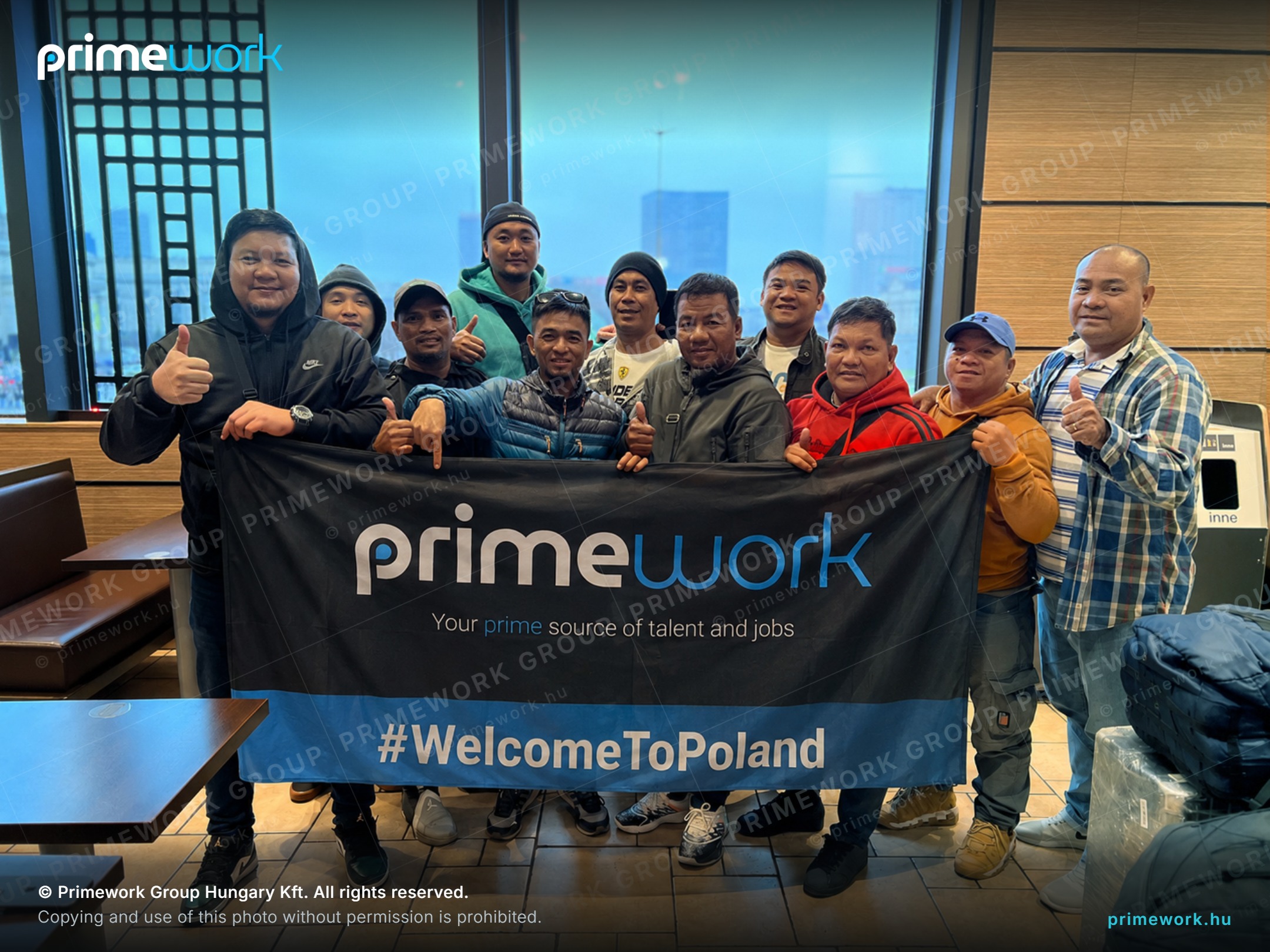
Indonesian teams are calm and cohesive when rules are clear and a group leader is assigned. A few simple decisions shorten onboarding.
Language barrier
Simple English instructions, pictograms and a group leader who also interprets in larger groups.
Indirect communication
Indonesian workers rarely raise problems openly – short, regular one-to-one check-ins help.
Diet and religious practice
Own kitchen in housing, pork-free options, a prayer space and flexible breaks during Ramadan.
First winter and acclimatisation
Winter clothing, guidance on weather and commuting, support in the first weeks.
Short answers about recruiting workers from Indonesia.
Indonesia is the world's fourth most populous country with a young labour market and a long tradition of working in Japan, Korea, Taiwan and the Middle East. Candidates are used to disciplined Asian production systems – shift work, quality and safety rules are nothing new.
Important: under current rules, new employment-purpose residence permit applications are open to citizens of the Philippines, Georgia and Armenia, and from 6 June 2026 no country is designated for new entrants in the guest-worker category. For candidates from other countries we assess permit options (e.g. EU Blue Card, National Card) individually, based on current OIF guidance – these are not general workarounds.
1) Call, quote, agreement and demand letter, 2) demand legalisation at the Embassy of Indonesia in Budapest, 3) recruitment through a licensed P3MI agency and registration in SISKOP2MI, 4) employment-purpose residence permit at the OIF, 5) pre-departure training, medical exam and visa at the Hungarian Embassy in Jakarta, 6) arrival, housing, address registration and onboarding.
Planned arrival is 2–3 months. Timing depends on the capacity of authorities, consulates, embassies and visa systems, and on the applicable procedure; it is not a guaranteed deadline.
KP2MI is the Indonesian state body responsible for protecting migrant workers. A P3MI is a licensed recruitment agency – only such an entity may legally send workers abroad. The whole process is recorded in the SISKOP2MI system, giving transparency to the employer and protection to the worker.
The native language is Bahasa Indonesia. English is usually basic or conversational – better among candidates from hospitality, maritime work and overseas contracts. We state the level in each profile and assign a group leader who interprets for larger groups.
The basis is the national BNSP certification (practical exams at LSP centres), BLK and LPK training centres, SMK vocational schools, plus certificates from contracts in Japan (ginō jisshū), South Korea (EPS), Taiwan and Malaysia.
An upfront fee of HUF 150,000 + VAT per person after the agreement enters into force, plus a success fee of HUF 200,000 + VAT (unqualified) or HUF 250,000 + VAT (qualified) per person after a successful 30 days from the start of work. With 27% VAT that is HUF 444,500 or HUF 508,000 gross per person. Indonesian-side procedure, official and visa fees, translations and travel are separate and agreed in writing in advance.
Manufacturing and electronics, welding and shipbuilding, food and fish processing, warehousing and logistics, hospitality and construction.
We organise flights from Jakarta, airport transfer, housing, address registration and first formalities (TAJ number, tax ID, bank account). We also suggest cultural measures: own kitchen, pork-free options, a prayer space.
Indonesia offers large volumes of production and technical candidates with Asian factory experience. In exchange, embassy legalisation and the P3MI procedure add a step, and English is typically weaker than in the Philippines.
Within the 30-day guarantee period from the start of work, in the cases set out in the agreement, we provide a replacement free of charge. The replacement's success fee is due after their own successful 30 days.
Direction: IndonesiaWe start with a needs call, a quote and an agreement. Then we legalise the demand, start recruitment and the Hungarian permit procedure – with an agreed arrival schedule.
Planned arrival is 2–3 months. Timing depends on the capacity of authorities, consulates, embassies and visa systems, and on the applicable procedure; it is not a guaranteed deadline.